Can a fall be predicted before it happens? Can medicines already approved for other conditions help treat or slow Alzheimer's disease and related dementias? Two NIH R01 applications from Integrated Senior Foundation and Cedars-Sinai are built to answer exactly those questions.
Most of senior care still responds to health events after they occur. These two applications are built to get ahead of them. Falls are the leading cause of injury among adults aged 65 and older, with roughly one in four older adults falling each year and about one million hospitalized as a result [1]. Alzheimer's and related dementias present a parallel problem on a different timeline, where new drug development is slow, expensive, and frequently unsuccessful, which is why many researchers now pursue the faster, lower-risk path of repurposing medications already approved for other conditions [3]. Both challenges share a common gap, namely that today's systems tend to react once decline is already visible rather than intervene before it takes hold.
Integrated Senior Foundation, supported by its data infrastructure ISAI (Integrated Senior AI), has submitted two R01 grant applications to the National Institutes of Health in collaboration with Cedars-Sinai. The R01 is the original and historically oldest grant mechanism the NIH uses to support health-related research [2]. Each application is designed to address a major health challenge facing older adults by combining clinical research, artificial intelligence, and real-world data drawn from senior living communities.
Predicting falls before they happen
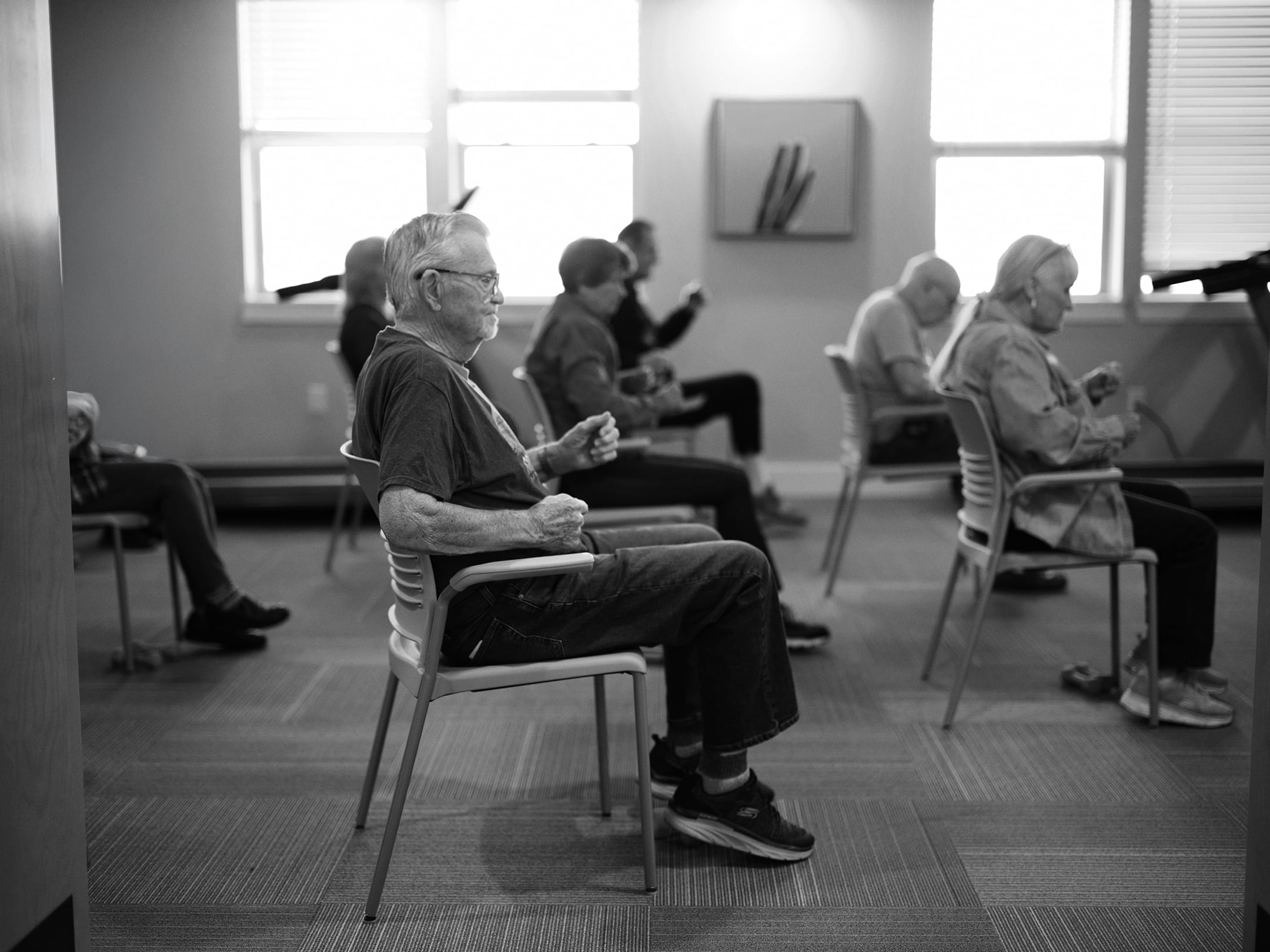
Today's healthcare system generally responds after a fall has already occurred. The first application sets out to change that model. Led by Professor Joseph Schwab and Dr. Hamid Ghaednia at the Center for Surgical Innovation and Engineering at Cedars-Sinai, the R01 Balance Scale project seeks to better understand the balance factors created by muscle atrophy that contribute to falls before they occur. By combining clinical expertise with AI-driven analysis and data from senior living communities, the researchers aim to identify early warning signs that can prompt proactive intervention.
For residents, earlier detection can mean maintaining independence longer. For operators, it points toward more personalized, preventative care. For the wider field, it represents a shift from managing falls after the fact to anticipating the conditions that precede them.
Rethinking medication safety in Alzheimer's and related dementias
The second R01 application, led by Dr. Yasaman Fatapour, focuses on developing a translational framework to accelerate therapy discovery for Alzheimer's disease and related dementias. The proposed project brings together Cedars-Sinai, Integrated Senior Foundation, and collaborating experts to combine artificial intelligence, cell-based studies and organ-on-chip models, and real-world senior living data.
The goal is to identify promising repurposed therapies, validate them using both existing data and cell studies, and evaluate how medication exposures and non-pharmacologic interventions such as activity, sleep, nutrition, and cognitive engagement may work together to improve outcomes for older adults living with cognitive decline.
Why this partnership matters
These projects represent more than research. They represent collaboration across healthcare, technology, and senior living. By pairing Cedars-Sinai's world-class biomedical research with the practical experience and real-world data provided by Integrated Senior Foundation, supported by Integrated Senior AI, the partnership aims to accelerate discoveries that directly benefit older adults. That evidence runs deep rather than wide. ISF communities generate roughly 100,000 data points per resident per month, the kind of continuous longitudinal signal that laboratory data alone cannot reproduce.
For families exploring senior living communities, this demonstrates a commitment to innovation and evidence-based care. For operators, it highlights the growing role of technology and predictive analytics in improving resident outcomes. For investors and healthcare partners, it reflects the increasing importance of research collaborations that can shape the future of aging services.
Where this fits
While both NIH R01 applications remain under review, the submission itself marks the milestone worth noting here. The premise behind both is the same one that guides how ISF approaches innovation in general, which is that better outcomes come from asking better questions and then testing the answers where aging actually happens. Prediction over reaction, and validated therapies over one-size-fits-all treatment, are not slogans in this context. They are the specific aims of two grant applications now sitting in front of the NIH, built on real-world evidence that only communities can supply.
Sources:
Centers for Disease Control and Prevention. "Facts About Falls." Older Adult Fall Prevention. https://www.cdc.gov/falls/data-research/facts-stats/index.html
National Institutes of Health, National Institute of Biomedical Imaging and Bioengineering. "NIH Research Project Grant Program (R01)." https://www.nibib.nih.gov/programs/nih-research-project-grant-program-r01
National Institute on Aging. "Beyond amyloid: Targeting a broader range of Alzheimer's disease factors." February 2025. https://www.nia.nih.gov/research/blog/2025/02/beyond-amyloid-targeting-broader-range-alzheimers-disease-factors